
In Venezuela, we have not been invaded

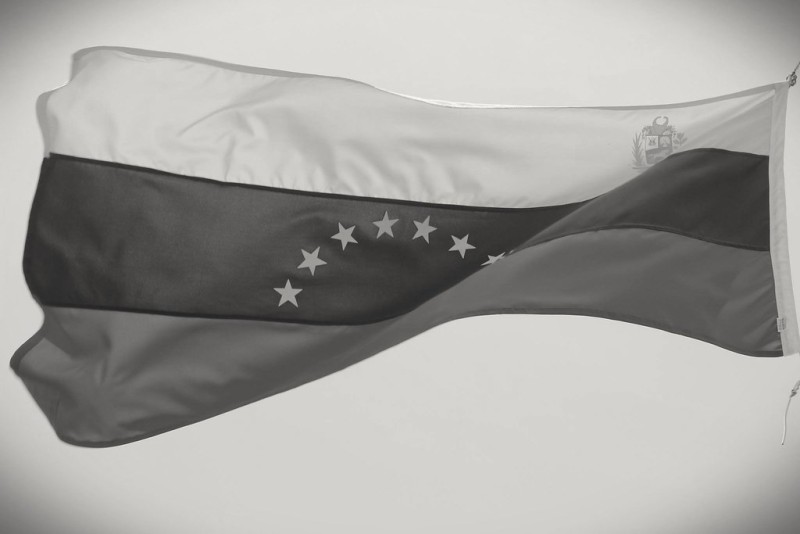
Photo by Luis Rodrigues Andrade/Flickr
I am writing these words from Caracas, the capital of Venezuela, on December 12, 2025, one day after María Corina Machado, the newly appointed Nobel Peace Prize winner, said at a press conference in Oslo, Norway, in response to a journalist’s question about whether she would accept a military invasion of Venezuela, that:
Venezuela has already been invaded. We have the Russian agents, we have the Iranian agents, we have terrorist groups such as Hezbollah, Hamas operating freely, in accordance with the regime. We have the Colombian guerrilla, the drug cartels that have taken control of 60 percent of our population, not only involving drug trafficking but in human trafficking, networks of prostitution. This has turned Venezuela into the criminal hub of the Americas.
In a week or two, my first daughter will be born, one among thousands of Venezuelan babies, inside and outside the country, who are being born or have just arrived in the world. It may seem like a detail that would not matter to anyone beyond our immediate families and friends, but the words of Machado and the actions of the US government in recent months place all Venezuelans in the crosshairs of an apparently imminent military invasion; given the narrative imposed on us—for Machado, we are “the criminal hub of the Americas”—and the current global context, in which genocide in Gaza occurs with total impunity, it is logical and even prudent to fear that such an invasion would seek to destroy everything in its path, hijack our future, and make us pay for our “freedom” with thousands of lives.
Venezuelan social and political forces are, and have been all these years, diverse in their positions and in their magnitudes. The problems that Venezuelans face on a daily basis have been exacerbated by the unilateral sanctions imposed on the Venezuelan people which, according to the 2014 report of the Special Rapporteur on the Negative Impact of Unilateral Coercive Measures of the United Nations, constitute a violation of international law seriously impacting the country’s population and preventing the enjoyment of human rights.
Our problems are not few, nor are they without enormous complexity—difficult to grasp in their entirety even for ourselves. We have problems, like any country; problems that have been part of our daily lives for years and that have, in many ways, eroded the legitimacy of all political leadership in the country, whether in government or in the opposition. This diversity of political and social forces in Venezuela even includes clear and well-founded criticism of the Venezuelan government in many respects—criticism from the left, from popular movements, and from Venezuelan workers of many of the paths we have taken in recent years.
Like any country, we are facing our own dilemma—a dilemma that includes, however, the fact that we sit atop the world’s largest oil reserves and among the largest reserves of gold, water, and coltan, at a time when the geopolitical map is being redrawn, the US empire is cynically playing its cards, Israel is seriously beginning to turn its attention to Latin America, and the major industrial and commercial powers are dividing up the world. So, while we are dealing with a circumstance common to the entire planet—the US empire in its most psychotic phase—we insist on the principle of self-determination, on our right to life, and on our conviction that we will be the ones to find the necessary channels to sustain ourselves and move forward on our own path.
The dangerous characterization of Venezuela
No, in Venezuela we are not living under invasion by China, Russia, Hamas, Hezbollah, Iran, or any other foreign force. There is no direct evidence of this. If we had been invaded, as Machado would have us believe, it would imply the direct intervention of specific forces from these countries in our daily lives—and that is not happening in any way. Government advisors, or defense and trade agreements between nations—none of these, which are routine for any country, imply any form of invasion. There is no evidence that any foreign armed, police, parapolice, or paramilitary force is operating in Venezuela with the authorization or support of the national government. Furthermore, unlike in other countries in the region, there are no armed conflicts arising from territorial disputes between drug cartels, nor even, at this point, more localized or smaller-scale conflicts involving microtrafficking, making it impossible to claim that “drug cartels have taken control of 60 percent of our population.”
The idea that Trump and Machado are trying to construct—that Venezuela is the hub of operations for all the evils that populate the nightmares of the West—is nothing more than a global narrative designed to dehumanize Venezuela and the region enough so that, once again, as is currently the case with Gaza and Sudan and so many other conflicts, international public opinion is left uncertain as to whether, given the seriousness of our situation, the end might justify the means—in this case, among other possibilities, our extermination. Let us never forget what happened in Libya or Iraq, to mention just two of a long list of countries “liberated” from evil by the United States. And if we believe in the idea that it is impossible to replicate experiences in the Middle East or Africa in Latin America, let us not lose sight of the fact that, since September, the United States has killed at least 87 people in its attacks in the Caribbean under the same premise that Israel kills men, women, and children with impunity in Palestine: they are terrorists, not human beings, and they are terrorists because they say they are.
In the context of what has happened in Gaza—more than 20,000 children have been killed with impunity—and taking into account that Machado is a close ally of the Israeli government and Netanyahu, the words of the current Nobel Peace Prize winner are a direct attack on the lives of Venezuelans and a clear call for the genocide that the United States and Israel are committing in Gaza to be repeated in Venezuela.
Venezuelans both inside and outside the country deserve the opportunity to solve our problems according to our own criteria and our own capabilities. That is sovereignty. There is currently no invasion by any foreign force in our country, and there is no basis for thinking that we represent a threat to peace in the region.
The only and most likely possibility is that we will be invaded by the US government in pursuit of nothing more than the global maintenance of its hegemony at the expense of our resources, our sweat, and our blood, both ours and that of our children.
Giuliano Salvatore is a Venezuelan documentary filmmaker, photographer, and teacher based in Caracas, Venezuela. He is a member of the Tricontinental Institute for Social Research.