
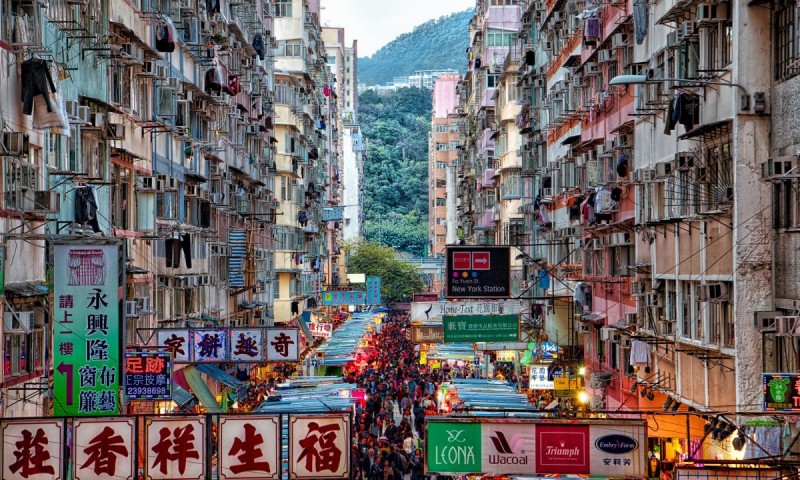
Is China capitalist or socialist?

Despite sweeping market reforms, China remains a socialist system in which the state, not capital, ultimately sets the terms of developmen, writes Owen Schalk. Photo by Radu Micu/Flickr.
Few questions provoke more confusion—and sharper disagreement—on the left today than whether China is capitalist or socialist. The country’s hybrid system, combining extensive state control with deep integration into global markets, resists easy categorization. But how one answers this question carries real political weight: it shapes whether China is seen as a counterweight to Western capitalism, a participant in it, or something else entirely.
In October 2020, Chinese President Xi Jinping stated that “Reform and Opening Up”—the process of economic liberalization initiated by the Communist Party of China in 1978—is “an ongoing task [that] will never end.” Xi stressed that “without Reform and Opening Up, China would not be what it is today, nor would it have the prospects for a brighter future… Openness brings progress, while isolation leads to backwardness.”
Following Mao’s death in 1976, the Communist Party, under Deng’s leadership, launched Reform and Opening Up. The government dismantled rural communes, opened 14 Special Economic Zones in coastal regions to attract foreign investment, granted greater autonomy to local governments and private capital, initiated a wide-ranging process of scientific and technological exchange with foreign countries (notably the US), and introduced managerial techniques from capitalist economies in pursuit of rapid economic growth. Deng sought growth and modernization at any cost. “If we can’t grow faster than the capitalist countries,” he said, “then we can’t show the superiority of our system.”
In 1984, Deng used the term “Socialism with Chinese Characteristics” to describe China’s new development path. Three years later, Premier Zhao Ziyang asserted that China remained in the “primary stage of socialism,” the initial phase of building a communist society, in which private capital would necessarily play a large role. At the 13th Party Congress that year, the Communist Party of China adopted the term “planned market economy” to describe its model.
Views on China
On the left, one’s views on Reform and Opening Up condition what one thinks about present-day China. Some, like Zhun Xu and Minqi Li, consider Reform and Opening Up to be capitalist restoration. British-American academic David Harvey has termed the post-1978 liberalizations “Neoliberalism with Chinese Characteristics.” Others analysts—for example, Carlos Martinez, Chengu Enfu, and Wen Tiejun—argue that China continues to adhere to the socialist road.
Describing China’s economic development under Reform and Opening Up as capitalist is certainly not inaccurate. At the Third Plenary Session of the 11th Central Committee in 1978, the Communist Party of China stated that “modernization” had supplanted class struggle as the party’s central principle; at the same time, China integrated into global capitalist resource flows and division of labour. As China’s government abandoned the language of class struggle and embraced the country’s role as workshop of the capitalist world, Chinese workers were subjected to hyper-exploitation by foreign and domestic capital.
The commodification of housing, health care, education, and other public goods is a reality of life in China today, as is rampant inequality. Meanwhile, state sector in China employment plummeted from 113 million in 1995, to 81 million in 2000, to 64 million in 2007. Today, the ratio of workers employed in China’s private sector is roughly equivalent—in fact, slightly higher—than private sector employment in the US.
On the other hand, the Chinese state retains public ownership of land. Private capital is incentivized to follow the state’s Five-Year Plans, which have the stated goal of transforming China into a “modern socialist nation.” State-owned enterprises, or SOEs, play the role of social enterprises serving public interests and strengthening the real economy (that is, the non-financial sector), which can thereby largely guarantee people’s employment and livelihoods. Internal Party Committees operate within SOEs and private companies, including foreign companies, with the mandate of ensuring capital serves the state’s long-term goals. China’s public infrastructure, including its world-class and ever-expanding railway system, is operated as a public good and does not turn a profit. State planning has helped achieve poverty alleviation on a scale never before seen in human history, lifting close to 800 million people out of extreme poverty over 40 years.
Evidently, policy in China is not dictated by short-term profit and the anarchy of production. In this sense, describing the Chinese state as capitalist seems to miss the mark.
China’s state is not capitalist in nature, as it is neither governed by the domestic or international capitalist class nor driven by the logic of profit for its own sake. Despite notable internal divisions, key continuities can be traced from the Mao period to the present, including the primacy of state planning, the prioritization of the common good over private gain, and the ebbing and flowing—yet ultimately persistent—emphasis on Marxist economics.
There is a tendency among some China observers to treat 1978 as a sharp dividing line in the country’s development. Closely related is the view that Reform and Opening Up marked a complete rupture with the Mao period—a total reorganization of social and economic relations.
Chinese Marxist scholar Wen Tiejun rejects this “1978” demarcation, advancing instead a “Ten Crises” model of Chinese development. In this account, Reform and Opening Up was not a singular turning point but one of several major state responses to economic crisis over the history of the People’s Republic. These crises stem from the war-torn underdevelopment inherited in 1949, China’s subsequent reliance on external economic assistance—first from the Soviet Union, then the US—and the tensions and contradictions generated by post-1978 capital accumulation. Each crisis prompted direct state intervention that addressed immediate pressures while laying the groundwork for future contradictions. Wen’s analysis includes hyperinflation at the founding of the People’s Republic, the interruption of Soviet aid in the 1960s, structural crises associated with reform, the 1997 Asian financial crisis, the global financial crisis of 2008, and environmental crises linked to capital accumulation.
By presenting such an analysis, Wen hopes readers will “grasp the historical continuity” of Chinese development from 1949 to the present, rather than focusing solely on party infighting and factional power grabs. Writing in Monthly Review, Ken Hammond summarizes Wen’s perspective on Chinese economic development:
Wen’s narrative of China’s course since 1949 reveals both continuities and ruptures, from the ongoing quest for foreign investment and technology, the fraught process of primary accumulation, to the extraction of surplus value from labor. These were accompanied by shifts in emphasis from mobilizational movements to expert-led management. He is clear that much has been achieved, but just as clear that the future will contain its own contradictions and challenges.
Reform and Opening Up marked the beginning of a new kind of socialism, one far more open to private capital accumulation than earlier socialist models. In this combined capitalist-socialist system—what the Communist Party of China calls “market socialism”—the emphasis remains, ultimately, on the socialist dimension. As author Helena Sheehan, visiting professor at Peking University, writes: “Both in China and abroad, people ask if China is capitalist or socialist. When I am asked, I answer that it is both. I think that China is engaging in a massive world historical experiment in a new relationship between capitalism and socialism, somehow using capitalism to build socialism.”
In an interview with Canadian Dimension, Sheehan restated her position on China. “I believe it is basically socialist, but in a complicated way,” she said. “The current leadership of the CPC and many Chinese people I know believe they are on a path to socialism. I think it is quite precarious, but I put my hopes on that being the case. It is one of the few hopeful prospects in this bleak world these days.”
Minqi Li, a political economist at the University of Utah and author of China and the 21st Century Crisis, holds a more critical view. Over email, Li told Canadian Dimension: “The Chinese industrial sector is dominated by domestic and foreign capitalist enterprises. State-owned enterprises are virtually nonexistent in agriculture. Construction and most service sectors (such as wholesale and retail, hotels and restaurants, business and professional services, residential services, and technology services) are dominated by private enterprises.”
After 1978, the Communist Party of China abandoned internationalism and Third Worldism in favour of pursuing economic development at all costs. This meant discarding many pillars of the Mao era—internationalism, class struggle, communal production—and effectively exchanging a vast, low-paid labour force for access to international capital, along with the technology, scientific expertise, and managerial techniques required for state-led development on an immense scale.
Reform and Opening Up did not represent the definitive triumph of capitalism, and China’s state today cannot be accurately described as capitalist. Instead, the conflicts within China’s model—and the present and future obstacles it faces—are the consequence of the party’s decision to pursue a form of socialism oriented above all toward economic growth. This approach has entailed the widespread use of markets and capital accumulation, with all the attendant tensions and contradictions.
A market in Kashgar, Xinjiang in 1992, with a slogan on the left saying “adhere to Reform and Opening” and a slogan on the right saying “uphold the Four Cardinal Principles.” Photo by fdecomite/Flickr._Market_in_Xinjiang__1992_800_525_90.jpg)
The Mao period
Despite its divergence from the Mao era (1949–1976), the rapid economic growth of Reform and Opening Up would not have been possible without earlier achievements. As Ezra Vogel, author of Deng Xiaoping and the Transformation of China, notes: “By the time Deng came to power, Mao had already unified the country, built a strong ruling structure, and introduced modern industry—advantages that Deng could build on.”
After the victory of the revolution in 1949, Mao affirmed that China had entered a period of “new democracy,” or joint rule by the peasantry and proletariat alongside patriotic elements of the petty and national bourgeoisie. By 1956, industry and agriculture had been nationalized, and social relations in both the countryside and urban areas had been transformed to such an extent that the state declared socialism had superseded new democracy. Freed from imperialist domination and feudal social relations, the Communist Party built an integrated, nationwide planning system aimed at developing heavy industry and directing resources into high-priority areas of the economy according to necessity rather than profit. Commodity production for exchange was replaced by a system of planned resource allocation.
The Polish Marxist Isaac Deutscher described the aspirations of the Communist Party this way: “It was determined to turn China into an integrated and modern nation… National ownership of industry, transport and banking, and a planned economy were the essential preconditions for any even halfway rational deployment of China’s resources and for any social advance.”
The Mao period secured self-sufficiency in energy and many raw materials. The Communist Party tamed hyperinflation and achieved price stability. At the same time, rapid industrial development and price stability relied on the squeezing of the peasantry, which contributed to the catastrophic failure of the Great Leap Forward.
Despite the devastating effects of the Great Leap famine, the Mao period’s gains are still recognized inside and outside China. As Isabella Weber, author of How China Escaped Shock Therapy, writes: “By the time of Mao Zedong’s death on September 9, 1976, China had long recovered from the Great Famine and had achieved remarkable progress in public health, education, efforts toward a green revolution, as well as industrialization.”
Interestingly, even the World Bank praised China’s economic development under Mao. A 1983 report notes: “The previous 30 or 40 years of Chinese development had been remarkably successful… China had combined rapid growth and industrialization [and] had achieved the virtual elimination of the worst aspects of poverty.”
Stanford economics professor John G. Gurley summarized the gains of the period in his book Challengers to Capitalism:
Only 25 years after Mao and his party captured national power, China had more than doubled agricultural production, raised industrial output by 20 times…become a formidable military power, greatly reduced illiteracy, and virtually eliminated the threat of famine and most pestilence. The people of China had tripled their per capita incomes [and] achieved high employment levels without inflation.
The Mao period was not without internal conflict. The infamous Cultural Revolution of the late 1960s was essentially a civil war launched by Mao against “capitalist roaders” within the Communist Party. In Gurley’s words, the Cultural Revolution was spurred by Mao’s “conviction that China could not progress toward communism if the superstructure of society reflected bourgeois ideas that were at variance with the socialist economic base… The development of the productive forces, Mao asserted, was being impeded by an outmoded superstructure that had to be swept away.”
For supporters of Mao’s line, an unfavourable international context—tensions with the USSR, US wars of aggression in Southeast Asia, the Western-backed 1965 coup in Indonesia that violently exterminated the world’s third-largest Communist Party—seemed to confirm the need for radical action to protect the gains of the revolution.
Today, the Communist Party’s official view is that the Cultural Revolution was a left deviationist error that brought chaos to China and hindered economic development. Some challenge this view, such as Dongping Han and Gao Mobo. Regardless of one’s perspective, the Cultural Revolution revealed sharp differences of opinion within the Communist Party on China’s path forward—differences that again came to the fore in the years following Mao’s death.
The roots of reform
Thirty-three years after the publication of his 1937 book Red Star Over China, American journalist Edgar Snow returned to the country to research his new book Red China Today. Upon seeing the extent of China’s economic and social gains, Snow told a party official that China was no longer a “backward country.” The official replied: “You are mistaken… China is still a backward country…if we speak of economic progress we can only say that China has laid the foundations for fundamental change. We have enormous difficulties to overcome before we can call ourselves a forward nation.”
In the final years of his rule, Mao had already begun reopening China to the West. Tensions between China and the USSR were high in the aftermath of the 1969 Sino-Soviet border conflict. The USSR’s withdrawal of financial and technical aid had deprived China of its “only source of modern productive equipment and expertise,” leading China’s leadership to conclude that “the primary contradiction facing China in geopolitical terms was no longer with US imperialism, but was with the Soviet Union.”
In early 1969, Mao instructed marshals Chen Yi, Nie Rongzhen, Ye Jianying, and Xu Xiangqian to jointly analyze international affairs and provide policy recommendations. The four marshals argued that China should play “the American card”—that is, improve relations with the US as a counterbalance to the Soviet Union.
In the early 1970s, China’s government increased its imports of foreign goods and technology. At roughly the same time, US President Richard Nixon embarked on his famous trip to China. Opening to the US continued under Mao’s successor, Hua Guofeng, who launched China’s first Special Economic Zone in the hope of attracting foreign direct investment. While much would have to change within China’s leadership before Reform and Opening Up could fully take shape, the foundations of US-China rapprochement were laid during the late Mao era.
Weber notes that in 1977, one year before Deng came to power, “Chinese delegations were sent all around the world, and exchanges with foreign countries increased rapidly [representing] an openness to Western capitalism and a farewell to the old socialist internationalism and Third Worldism.”
Despite the gains of the Mao period, rural poverty remained a tremendous problem. At the time of Mao’s death, one third of the rural population (260 million people) lived below the official poverty line. In 1979, the annual per capita income of Chinese peasants was $40 USD per year. Evidently, something needed to change if poverty was to be overcome once and for all. This awareness drove many within the party to advocate a new approach to social and economic organization—what would become known as Reform and Opening Up.
Billboard displaying Deng Xiaoping in Shenzhen, Guangzhou Province, China. Photo by streetimagery/Flickr.
The transformation of China
Suspicious of the USSR and eager for economic assistance, post-Mao China diversified its international relationships, most notably through economic opening to the US and other capitalist states. The ideological conflict within the party that unfolded alongside this thaw resolved in the sidelining of the left faction and the decisive empowerment of the right.
Between July and September 1978, China’s State Council convened the Forum on Principles to Guide the Four Modernizations. According to Deng, the achievement of these “four modernizations”—agriculture, industry, science and technology, and defence—was a prerequisite for China’s emergence as a major industrial power in the 21st century.
As Deng’s biographer Ezra Vogel writes, the forum sought to address two key questions relevant to Reform and Opening Up. First, “How could China expand foreign trade and the role of foreigners without losing control?” And second, “How could China provide incentives to individuals, local areas, and foreigners while still retaining overall control of the national planning system?”
In its quest to secure the four modernizations, Chinese reformers embarked on study tours and exchanges across Eastern and Western Europe, in Hong Kong and Japan, and with the World Bank and other international agencies. Some reformers advocated shock therapy along the lines of what transpired in the former USSR—mass privatization, the removal of all price controls in one “big bang,” trade liberalization, and fiscal austerity. But the shock therapists were marginalized. Instead, the Communist Party used the state to guide capital accumulation in line with long-term goals and to constrain the political influence of domestic and foreign capital. Weber writes: “The Chinese state uses the market as a tool in the pursuit of its larger development goals. As such, it preserves a degree of economic sovereignty that buffers China’s economy against the global market.”
Specifically, Weber argues that the state’s maintenance of the dual-track price system—by which enterprises could sell goods above government-set prices after meeting state quotas—resulted in gradual price liberalization rather than “big bang” shock therapy. This gradualist approach insulated China from the socially catastrophic effects of marketization seen in the former USSR and post-socialist Eastern European countries.
When comparing post-Soviet Russia to China, the contrast is stark:
Russia’s share of world GDP almost halved, from 3.7 percent in 1990 to about 2 percent in 2017, while China’s share increased close to sixfold… Russia underwent dramatic deindustrialization, while China became the proverbial workshop of world capitalism…The average real income of 99 percent of people in Russia was lower in 2015 than it had been in 1991… As a result of shock therapy, Russia experienced a rise in mortality beyond that of any previous peacetime experience of an industrialized country… Beyond the devastation documented by economic indicators…most measures of human well-being, such as access to education, absence of poverty, and public health, collapsed.
From the beginning of Reform and Opening Up, the Chinese government was concerned about the erosion of the state’s role and sought to protect the national planning system by imposing limits on runaway marketization. Broadly, the party succeeded in securing the state’s dominance—although the hyper-exploitation of Chinese labour by foreign and domestic capital clearly sharpened contradictions between management and workers, as evidenced by the rise in collective action over the 1990s, the 2007 port strike in Shenzhen, the Tonghua Iron and Steel Group riot of 2009, the strike wave of 2010, and the Hailiang strike in December 2011. Nevertheless, those who anticipated the emergence of a militant working-class movement opposed to the Communist Party’s market socialist path were apparently mistaken—much like those who predicted the “foreign economic domination” of China’s resources, a concern raised by Martin Hart-Landsberg and Paul Burkett in their 2005 book China and Socialism.
Importantly, the leading role of the party and state dictated the terms of China’s “partial assimilation” into global capitalism, as Weber puts it. Global capitalism did not dictate terms to the Chinese state. As a result, “the state maintained its control over the ‘commanding heights’ of China’s economy as it switched from direct planning to indirect regulation through the state’s participation in the market. China grew into global capitalism without losing control over its domestic economy.”
In a recent Monthly Review essay, Helena Sheehan offers her own views on the transformation of China:
China does not claim to have achieved anything more than a primary stage of socialism and to be on a protracted path to a more advanced form of socialism. Despite all that was achieved from 1949 to 1976, I understand why a new direction was necessary and why Reform and Opening Up has brought industrial investment, scientific and technological advance, poverty reduction, and international interaction. However, I question whether it was necessary to decollectivize agriculture, to privatize state-owned enterprises, or to commodify housing, health care, education, and other social public provisions.
Speaking with Canadian Dimension, Sheehan noted: “There is a tension between capitalist and socialist dimensions in China that is often glossed over in formulations about Socialism with Chinese Characteristics and China being on its own path to modernization. These statements tend to be repeated over and over without the difficult areas being articulated.”
The absolute priority of development
In 1980, China joined the World Bank and rejoined the IMF. With the creation of the rural Household Responsibility System in 1982, family farms replaced collective agricultural production. The communes were superseded by Township and Village Enterprises (TVEs), effectively autonomous cooperatives overseen by local party officials. Urbanization paired with decollectivization led to the creation of a migrant rural labour force—by 2000, the number of migrant rural workers reached 106 million—that became a low-cost army of labour in cities and Special Economic Zones.
Reform and Opening Up coincided with Western capital’s embrace of global outsourcing as a spatial fix for declining profits. A deluge of exports left China’s ports. Minqi Li writes:
China’s merchandise exports surged from 62 billion dollars in 1990, 249 billion dollars in 2005, to 2.05 trillion dollars in 2012. China’s share of the world total merchandise exports was 1.8 percent in 1990, 3.8 percent in 2000, and 11.1 percent in 2012. Since 2010, China has been the world’s largest exporter of goods.
In this period, the Chinese government embraced a capitalist-oriented, export-led growth strategy, powered by migrant rural labour, in exchange for access to technology, scientific expertise, and managerial techniques that could be applied by state planners to meet well-defined national development goals. Political scientist Lin Chun notes that these sweeping economic changes were accompanied by the “refusal of the language of class,” “extensive financialization,” and state efforts to “deradicalize society,” including the banning of the Four Great Freedoms of the Cultural Revolution era (the right to speak out freely, to air views fully, to hold debates, and to write big-character posters).
Economic development became the overriding priority through which capitalist-oriented policies and their inevitable social outcomes were justified. As inequality soared, Deng proclaimed that it was natural for some to get rich before others, while also stressing that the Chinese nouveau riche had a responsibility to ensure the rest of the population was not left behind. This appeal was doubtless cold comfort for the millions of migrant labourers toiling in the Special Economic Zones.
The cessation of China’s socialist internationalism fits within the broader development-first approach of the post-Mao era. As Deng himself said: “The goal of our foreign policy is a peaceful environment for achieving the four modernizations.” In other words, maintaining a foreign policy of peaceful co-existence and non-interference allowed China to build a wide range of global relationships, study management and production techniques from around the world, and apply those methods deemed compatible with its development objectives.
Shenzhen, one of the first Special Economic Zones of China. Notable high-tech companies such as Huawei, ZTE, and Konka were all founded there in the 1980s. Photo by Sparktour/Wikimedia Commons._800_600_90.jpg)
Echoes of Chongqing
Deng’s successor, Jiang Zemin, strengthened the party’s rightward orientation through his theory of the “three represents,” which permitted capitalists to join the Communist Party. Unsurprisingly, Jiang presided over expanded privatization and worsening inequality. In 2001, he oversaw China’s accession to the World Trade Organization. His successor, Hu Jintao, introduced measures to address inequality and strengthen state-owned enterprises under the banner of “social harmony” and “sustainable economic development.”
By the 2010s, it was clear to both the Chinese public and the Communist Party that societal contradictions had sharply intensified. Something had to change.
Economic growth may have raised living standards, but it also produced significant alienation and disaffection over inequality, corruption, labour exploitation, and environmental degradation. One expression of this dissatisfaction has been the Chinese New Left. Bo Xilai, who served as Party Secretary of Chongqing from 2007 to 2012, was championed by the Chinese New Left for his anti-corruption campaign, improvements to public safety, embrace of “red songs” and “red culture,” and redistributive policies implemented under the banner of “common prosperity.” Although disliked by the neoliberal faction within the state, many viewed Bo Xilai as a leading candidate for General Secretary of the Communist Party.
In March 2012, Bo Xilai was arrested for alleged involvement in the murder of British businessman Neil Heywood. He was expelled from the party and imprisoned. In November 2012, Xi assumed the position of General Secretary.
Many viewed Bo’s imprisonment as the end of the “Chongqing model.” However, Xi has since led a successful anti-corruption campaign and adopted the term “common prosperity” to describe his own approach to governance.
Danish Marxist Torkil Lauesen argues in his 2024 book The Long Transition Towards Socialism and the End of Capitalism that Xi’s rise to power “turned out not to be the hoped-for victory for the pro-neoliberal faction of the Party.” Lauesen identifies “echoes of Bo Xilai’s Municipality of Chongqing” in Xi’s policies. But while Xi may be moving China leftward, these gains are not necessarily secure. As Lauesen writes:
Four decades of ‘opening up’ towards neoliberalism has left its mark, not only in terms of increased inequality, but also in terms of worse working conditions, especially for workers in the export zones. The values and norms of neoliberalism have also left their mark. Individualism, a competition mentality, along with greed, have made their inroads at the expense of solidarity and community.
High-speed to high-quality development
During a visit to China in November 2025, a party member described Reform and Opening Up to me as a period of “high-speed development,” contrasting it with the current shift toward “high-quality development.” In Chinese Marxist analysis, Xi’s rule is often described as “the New Era,” a “Transitional Revolution” aimed at lifting China out of the primary stage of socialism toward the communist horizon. In this framework, the first revolution occurred in 1949 with the founding of the People’s Republic, and the second was marked by Reform and Opening Up.
Chinese scholars Cheng Enfu and Yang Jun write:
First, revolution takes the form of a seizure of power, in the sense of overthrowing the old regime and establishing and defending the new ruling authority. Second, revolution embodies reform, in the sense of self-improvement and development of the socialist system. Third, the revolution is a ‘transitional revolution,’ in the sense of a transformation from the primary stage of socialist society to the subsequent stage and to communist society.
Officially, the Xi administration seeks to smooth out the contradictions that emerged or deepened during the period of rapid but uneven development that followed Mao’s death. In many cases, the outcomes of Xi’s policies are more egalitarian than those of preceding administrations. Chinese workers’ wages have seen sustained growth, while taxes on the rich have increased. The number of billionaires in China is declining even as the middle-class swells. The government has moved to crack down on punishing work schedules like “996” (9 AM to 9 PM, six days a week). The privatization of state-owned enterprises has largely halted, while the party has placed renewed emphasis on Marxist principles. Meanwhile, public infrastructure continues to expand, and foreign and domestic capital has come under increased supervision through the presence of Internal Party Committees within private companies. Billionaires who attempt to influence the political process, such as Jack Ma, have had their wings promptly clipped.
“I am impressed with Xi Jinping,” Sheehan told Canadian Dimension. “I think the party and state are reasserting themselves in economics, culture, and knowledge production. I think it is a period of greater regulation of capital. There is also a revival of Marxism, driven from above as well as from below.”
Xi has also sought to strengthen China’s technological self-sufficiency. In 2016, then-US Commerce Secretary Penny Pritzker described China’s plan to invest $150 billion in building an indigenous semiconductor industry as “state-driven interference,” and criticized “new attempts by China to acquire companies and technology based on their government’s interests—not commercial objectives.” Evidently, Washington views China’s technological development as contrary to the free-market principles it claims to champion.
China’s “New Era” leadership also emphasizes ecological civilization as a “fundamental plan for the sustainable development of the Chinese nation.” Through centralized planning, China has achieved notable climate mitigation gains. Over the last 18 months, its emissions have been flat or falling, indicating a historic slowdown; by contrast, Canada’s recent emissions reductions have stalled, while US emissions are rising. The Trump administration has even moved to stop collecting emissions data from the country’s largest polluters.
Wind farm in Xinjiang. Photo by taylorandayumi/Flickr.
According to China’s 15th Five-Year Plan (2026-2030), the government aims to peak carbon dioxide emissions before 2030 and achieve carbon neutrality before 2060. Today, renewables account for over 60 percent of the country’s total installed power generation capacity.
China contributes 50 percent of global solar capacity and manufactures 80 percent of the world’s solar panels. In 2025, China “added about 240 gigawatts (GW) of solar and 61 GW of wind capacity in the first nine months alone, setting a new global record.” It is also the world’s largest producer of wind energy; in 2023, China accounted for two-thirds of all newly installed wind energy projects worldwide.
Despite these gains, some remain skeptical that Xi’s governance represents a meaningful return to egalitarianism. Minqi Li told Canadian Dimension:
My impression is that during the Xi Jinping years, the overall direction of China’s economic and social development has not fundamentally changed. Successive Party congresses, meetings, and resolutions have reaffirmed the objective that ‘the market should play the decisive role in resource allocation.’ It could be argued that the pace of privatization has slowed, but it has not been reversed.
Li points out that China’s household GINI coefficient (a measure of inequality) has stabilized at around 0.47, compared to 0.49 in the United States. “Despite the official Party policy to pursue ‘shared prosperity,’” he said, “Chinese society today is about as unequal as the US.”
China—capitalist or socialist?
For many on the left, the achievements of China’s market-friendly socialism—in terms of poverty alleviation, rising living standards, and technological self-sufficiency—are overshadowed by the exploitation of labour, the large-scale conversion of state property into private hands, ecological impacts, the demobilization of the masses, the dismantling of egalitarian collective institutions, and the accompanying de-emphasis of class by the state.
Jiexiong Yi, senior professor of Marxism at Peking University, praises the “miracle of economic development” but is forthright about past mistakes:
[W]hile the decline of state-owned enterprises meant abandoning the totalizing concepts of planned economics inherited from Stalin and Mao, the unchecked rise of private entrepreneurs led in cases to gross exploitation of workers, and further, the gross corruption of various government departments, officials, destruction of the environment, and so on. We are still struggling to correct these mistakes in practice, but in terms of theory it is all quite clear to us now.
China’s foreign policy is positive in many respects, grounded as it is in five overarching principles: mutual respect for territorial integrity and sovereignty, mutual non-aggression, mutual non-interference in internal affairs, equality and cooperation for mutual benefit, and peaceful co-existence.
However, peaceful co-existence should not be conflated with socialist internationalism. Although the Chinese leadership has shifted leftward in some respects over the past decade, this has not fundamentally altered the character of its foreign policy.
While the Belt and Road Initiative and similar projects have delivered important infrastructure to many Global South countries, China’s foreign policy remains primarily self-interested—as Deng emphasized, its central aim is to secure a stable international environment for domestic development. It is therefore unsurprising that China is currently apartheid Israel’s second-largest trading partner, and that Chinese and Israeli officials have recently met to discuss “deepening China-Israel economic and trade cooperation,” with no apparent reference to the genocide in Gaza. Moreover, China has shown little willingness to risk confrontation in defence of other states facing aggression or imperialist violence, whether Palestine or Cuba, Venezuela, or Iran. This should be regarded as a major shortcoming of any socialist project.
International left scholarship on China’s development model is extensive, and its debates are deeply instructive. Both critics and proponents of the planned market economy have produced illuminating analyses of China’s contemporary social, political, and economic realities.
Ultimately, the continuities between Mao’s China, Reform and Opening Up, and the New Era are strong enough to suggest that, despite sweeping marketization, China today retains a form of socialism. These socialist features help explain why China’s economy has grown at a pace far exceeding that of Western capitalist countries, and why the Chinese state has been able to steadily improve living standards while much of the capitalist world stagnates. One need not effusively celebrate China’s model to acknowledge that it remains fundamentally socialist; rather, it reflects the diversity of global socialist thought, in which different models can be weighed and adapted to specific national, cultural, and socioeconomic contexts.
Given the pace of change in China, and the diversity of perspectives within the Communist Party and the country’s broader Marxist community, the international left should keep a close watch on developments in this “New Era”—to see which continuities endure, and which contradictions may give rise to new crises.
Owen Schalk is the author of Targeting Libya: How Canada went from building public works to bombing an oil-rich country and creating chaos for its citizens, an exploration of Canada’s pivotal yet little-known role in Libya’s history, now available from Lorimer Books.