
Who is Ontario’s ‘food independence’ really for?

Photo by Jamie McCaffrey/Flickr
Last week, the Ontario government introduced the Protecting Ontario’s Food Independence Act, 2026 with claims that it will strengthen resilience, support local food systems, and protect farmers by restricting foreign land ownership while expanding agricultural production in the “Clay Belt”—a 180,000 square kilometre band of fertile but poorly drained clay soils stretching across northeastern Ontario and into Québec, long targeted for agricultural expansion.
These goals are politically appealing, particularly during a period of global instability and rising food prices. But a closer examination of both the legislation and on-the-ground land dynamics reveals a troubling disconnect between rhetoric and reality. Rather than addressing food insecurity or improving fair land access for farmers, the proposed reforms risk accelerating land concentration, environmental degradation, and the erosion of Indigenous treaty rights, all while (mis)framing export-oriented agricultural growth as local food security.
The provincial Ministry of Agriculture states that it is “reviewing its Grow Ontario Strategy focused on strengthening resilience and encouraging a buy-local approach.” However, land transaction data and interviews conducted across northern Ontario tell a very different story.
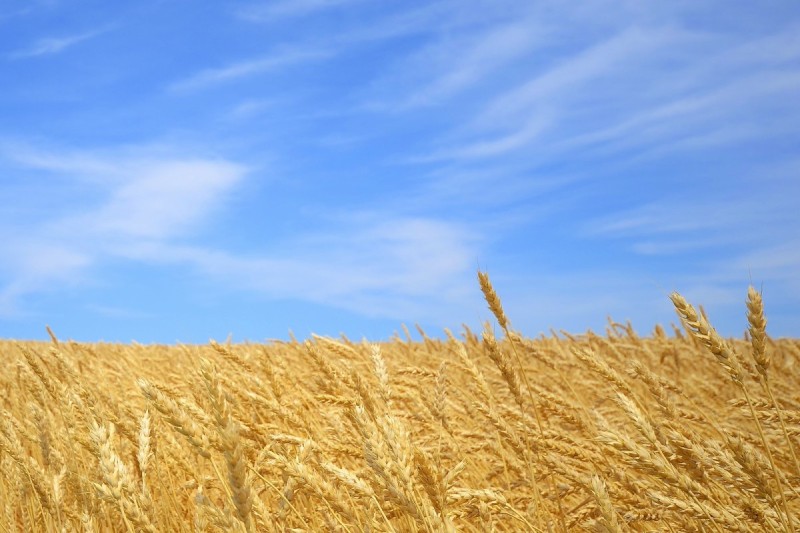
The agricultural expansion currently being promoted in the Clay Belt is dominated by large-scale grain production (notably canola, wheat, soy, and oats) and increasingly beef cattle operations, much of which is destined for southern Ontario processors or export markets. This production model does little to improve access to fresh, affordable, locally produced food for northern communities, many of which already face high food prices and entrenched food insecurity.
Industrial-scale grain and beef systems are poorly suited to addressing local food and nutrition needs, particularly in regions where infrastructure, cold storage, processing, and distribution are limited. Put simply, expanding export-oriented crop acreage does not translate into improved local food access, yet the legislation repeatedly conflates increased production volume with food security.
Who is consulted and who bears the impacts?
The government further claims it is “engaging with farmers, agri-food businesses and other industry partners to help position the sector for long-term self-reliance and prosperity.” Notably absent from this framing are the broader communities and ecosystems affected by large-scale land conversion.
Our research project, “Digitalization, financialization, and consolidation in the Canadian agri-food sector”—led by Dr. André Magnan (University of Regina), Dr. Annette Desmarais (University of Manitoba), Dr. Emily Duncan (University of Regina) and myself—shows that agricultural expansion in northern Ontario typically involves clearing forested land, installing extensive tile drainage (a system of underground pipes placed in soil to remove excess water and improve conditions for crop growth), and altering soil systems. These interventions permanently alter hydrological systems. Tile drainage accelerates water movement, which may increase the risk of downstream phosphorus loading, sedimentation, and infrastructure damage—all of which can trigger algal blooms and degrade water quality. These impacts are already being reported by research interviewees in watersheds such as Lake Timiskaming. Yet Ontario lacks comprehensive and consistent soil and water monitoring systems, particularly for agricultural land conversion in northern regions.
Crucially, the proposed legislation contains no clear mechanisms to monitor cumulative environmental impacts or to fund long-term oversight. The impacts of large-scale deforestation and tile drainage on northern clay soils, especially under changing climatic conditions, remain poorly understood. Proceeding without robust monitoring capacity effectively shifts environmental risk onto municipalities, downstream communities, First Nations, and future governments.
Ontario should first put in place a rigorous, publicly accountable monitoring system to establish baseline conditions and track cumulative impacts before opening the region to permanent, irreversible land-use change.
Growth metrics show main priorities: exports and GDP
Perhaps the most revealing statement in the government’s communications is its assertion that the Grow Ontario Strategy has already delivered “a 13 per cent average annual increase in exports, a 15 per cent rise in employment, and a 20 per cent increase in farm sales.”
These metrics lay bare a significant contradiction at the heart of the legislation. Export growth, rising farm sales, and GDP contribution are not the same as local food security or food sovereignty.
Employment gains in capital-intensive agriculture often coincide with land consolidation and declining farm numbers. Rising farm sales do not indicate improved land access for new or young farmers. Instead, our past and current research indicate increasing land inequity and consolidation. And export-oriented growth can actively undermine regional food systems by prioritizing globally competitive commodities over local and regional needs.
In this context, “food independence” operates primarily as a rhetorical frame rather than a guiding policy objective, as the Ontario agenda prioritizes competitiveness, scale, and global market integration.
Restricting foreign buyers misdiagnoses the land problem
A recent Globe and Mail analysis noted that “little data are available” to support claims about foreign acquisition of Ontario farmland. Our research both confirms this observation and clarifies it: detailed data do in fact exist, but the management of the data remain in private hands, are costly to access, and are largely absent from public policy debate.
Analysis of all agricultural land transactions registered in northern Ontario between 2014 and 2025 reveals clear and consistent patterns: farmland expansion and consolidation are overwhelmingly driven by a small number of large, highly capitalized Canadian farm operators and a handful of domestic farmland investment firms, not foreign buyers. These data allow transactions to be tracked by parcel size, purchaser, location, and cumulative landholdings, making visible concentrations of land control that aggregate statistics obscure.
The issue, then, is not a lack of data, but rather a failure of public access and policy attention, which risks misdiagnosing the land crisis while also deflecting scrutiny away from the domestic financial and ownership structures that are reshaping Ontario agriculture.
Indeed, a central feature of the proposed legislation is the aim to “protect local ownership of provincial agriculture by creating restrictions on foreign acquisition of Ontario farmland,” a move that again misdiagnoses the problem. By focusing on foreign ownership (a vague category that obscures who actually controls land and capital), the legislation diverts attention from domestic and regional financialization and consolidation, including the expanding role of public‑private finance. Farm Credit Canada, a federal Crown corporation, now openly partners with large investment firms—such as Bonnefield Financial and Area One Farms—to channel capital into farmland and agri‑food assets, raising serious questions about whose interests public agricultural finance is ultimately serving. Restricting foreign buyers while leaving these dynamics unaddressed may, in fact, intensify land concentration, as fewer buyers compete for land already dominated by capital‑rich domestic actors.
Recent debates in Saskatchewan about the persistence of foreign farmland ownership, despite legislation requiring Canadian residency, have sparked a review of the Farmland Security Act. However, a recent analysis finds similar conclusions to Ontario: farmland concentration is not being driven by foreign acquisition, but by domestic investment firms and local mega-farms.
Crown land expansion and Indigenous treaty rights
The legislation’s proposal to “expand agricultural production in northern Ontario by making it easier for Ontario farmers to lease or access arable land on the Clay Belt” carries particularly serious implications. Nearly all land targeted for expansion lies within Treaty Nine territory, much of it Crown land (nearly 95 percent is Crown land in northern Ontario) subject to unresolved land claims.
Despite this, agriculture in Ontario has historically operated without the clear(er) consultation and consent frameworks that govern sectors such as mining or forestry. Interviews show that there is widespread uncertainty among municipalities and industry actors regarding which First Nations must be consulted and how consent should be obtained. Further, there is little discussion of revenue-sharing arrangements, co-governance, or long-term Indigenous authority over converted lands.
Once Crown land is privatized or long-term leased, and especially once it has been cleared and tiled, future land restitution or Nation-led restoration becomes significantly more difficult. Comparable developments elsewhere, including the Carry the Kettle First Nation lawsuit in Saskatchewan, illustrate the legal, ethical, and political risks of proceeding without Nation-to-Nation consultation and consent frameworks.
What does ‘reducing red tape’ actually mean?
Finally, the legislation promises to “modernize, streamline, and reduce red tape for industry partners,” an objective shared in Bill C-5’s massive regulatory reforms short-cutting existing environmental laws and centralizing crucial decision-making power on major infrastructure projects. Such streamlining rarely “reduces red tape” by eliminating unnecessary processes. Instead, it tends to weaken environmental oversight and transfer environmental risk from industry to the public by accelerating approval processes. All of which are occurring at a moment when monitoring and enforcement capacity is already insufficient.
Streamlining without strengthening governance makes it highly likely that speed and scale will be privileged over accountability. When combined with expanding public-private finance and institutional land ownership, regulatory rollback can further entrench investor-led agriculture while externalizing ecological and social costs.
Ontario’s agri-food sector deserves further attention from public policy to enhance resiliency, but strengthening it requires more than merely defending and expanding acreage and exports. Meaningful food sovereignty and food security depends on who controls land, how decisions are made, whose rights are recognized, and whether agricultural systems serve communities or capital.
A genuine food independence strategy would confront increasing land equality directly, establish clear Indigenous governance frameworks for considering Crown land conversion, invest in soil and water monitoring, and meaningfully support regionally oriented, diversified farming systems and local food and habitat needs. Without these measures, the evidence from our research indicates that the proposed legislation would likely deepen the very vulnerabilities it is intended to resolve.
Sarah Rotz is an Associate Professor in the Faculty of Environmental and Urban Change at York University working at the intersection of geography, environmental studies, and political economy. Her work examines industrial agriculture, financial concentration, technology, and policy, and how these conditions are shaped by and reinforce capitalist, colonial and gendered dynamics. She also works and organizes with movements for land and food sovereignty, justice, and resistance.