
Don’t call it a sovereign wealth fund

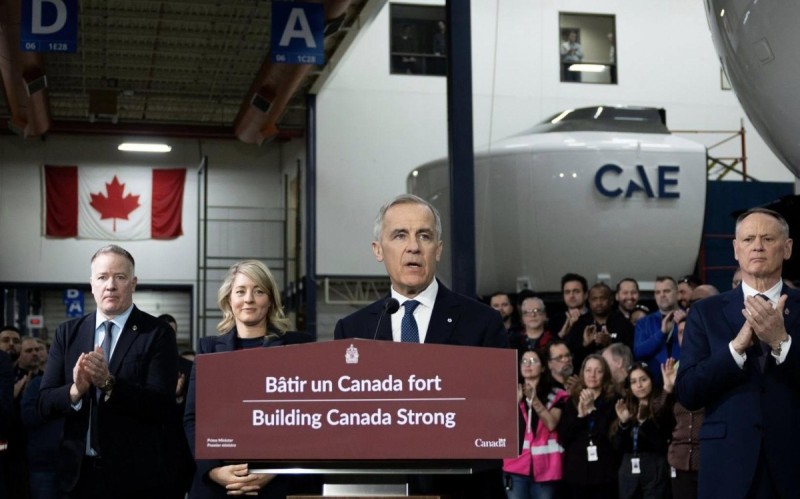
Photo courtesy Mark Carney/Facebook
Mark Carney recently announced the creation of Canada’s first national sovereign wealth fund. The fund, slated to be called the Canada Strong Fund, will be launched with $25 billion to be collected over the next three years.
Sovereign wealth funds (SWFs) are tools designed to pool public wealth and invest it profitably. Perhaps the most prominent example is Norway’s Government Pension Fund, which manages that nation’s surplus oil and gas revenues. In practice, the fund works by investing those revenues almost entirely in global financial markets—equities, bonds, and real estate abroad—rather than at home, with strict rules to prevent domestic investment.
Founded in 1990, Norway’s SWF is now responsible for over $2.7 trillion. The fund brought in $338 billion in 2025 alone and covered almost one quarter of the nation’s annual budget without risking its long-term sustainability.
Where will the money come from?
The world’s largest SWFs are generally financed by surplus profits from the fossil fuel sector or excess foreign exchange reserves. In Canada, the first provincial SWF was established in Alberta in 1976 by Peter Lougheed’s Conservatives using revenues from the oil and gas sector. The Alberta Heritage Savings Trust Fund (AHSTF) was meant to take fossil fuel profits and create a source of long-term revenue for Albertans. This model was the inspiration for the famous Norwegian fund. Unfortunately, Alberta opted not to tax the energy industry at a rate that allowed for significant contributions, and despite a 14-year head start over Norway’s SWF, the AHSTF now sits at a total value of just over $30 billion.
You might think that Carney’s new SWF would take the lessons from this history to heart. Perhaps he is planning to endow his Canada Strong Fund with a tax on the windfall profits the oil and gas industry is set to enjoy thanks to Trump’s misadventures in Iran. Or maybe his efforts at trade diversification are projected to flood Canada’s banks with yen, yuan, and euros that can be invested abroad.
Unfortunately, this does not seem to be the case. The details remain obscure, but unlike every major SWF in the world, there is no clear surplus designated to support this fund. Instead, it appears to be on track to be financed through debt and small investments from individual citizens.
While unusual, this approach may not be catastrophic. If the government can sell low-interest bonds at, say, 2.5 percent to seed the fund while securing a higher rate of return (the Norwegian fund’s average annual return of 6.6 percent, for example), the fund could, theoretically, generate a profit.
But this begs the question: is now really the time to finance a SWF with debt? We’re facing an oil shock, serious economic uncertainty stemming from AI, an American private credit market that looks like it’s trying to re-stage 2008, and unprecedented levels of household debt that have chewed up whatever flexibility the economy once had.
It’s a risky time to be taking on risk.
Where will the money go?
Sovereign wealth funds invest their money in a variety of ways. Norway’s fund, for example, focuses on maximizing returns through diversified investments, including equities, bonds, and real estate. The fund is oriented toward long-term, stable growth. Part of its strategy to ensure that stability is a set of rules that explicitly forbid domestic investment: “the fund is not invested in securities issued by Norwegian companies, securities denominated in Norwegian kroner, nor real estate or infrastructure located in Norway.”
Norway does this because SWF investments in domestic markets compound economic risk. If the economy crashes, the fund crashes with it—transforming its assets into liabilities and creating a kind of double exposure (the losses on the fund’s books and the losses in the domestic economy). By limiting itself to international investment, the fund hedges against Norway’s own economic cycles. Another advantage is that globally focused funds can’t overheat the domestic economy by flooding local industries with surplus capital. China’s largest SWFs, the China Investment Corporation and the State Administration of Foreign Exchange, follow similar practices for the same reasons.
Carney’s SWF ignores these risks. The Canada Strong Fund will target exclusively domestic investments; the money will go to “Canadian projects and companies.” The prime minister has stated that the fund could even be used to finance projects fast-tracked under the provisions laid out in Bill C-5.
This approach isn’t entirely anomalous. Some smaller SWFs, like Ireland’s Strategic Investment Fund (ISIF), do follow this path. These types of funds are generally mandated to avoid disrupting private capital markets and therefore steer clear of low-risk, high-reward investments. This structure has led domestically focused funds to underperform relative to their globally oriented counterparts. The Irish SWF, for example, secured an annualized return of only 3.4 percent between 2014 and 2024—about half the Norwegian fund’s results.
This promise of underperformance is built into the Canada Strong Fund. Any major industrial or infrastructure project in need of public money would almost certainly be a B-tier investment that has been unable to attract sufficient private capital. These projects are, by definition, higher-risk, lower-reward.
What we’re seeing here are dams and locks being built that have the potential to direct rivers of capital from the Canada Strong Fund to under-scrutinized, party-favoured projects with weak business cases. There is every chance our new SWF could become, like Justin Trudeau’s infamous Infrastructure Bank, a “slush fund” for companies that happen to be in the good graces of the Liberal Party.
Why financialize public investment?
The types of projects Carney has talked about financing with the Canada Strong Fund include “clean and conventional energy, critical minerals, agriculture, and infrastructure.” This makes the fund sound less like a SWF and more like a national development bank—an institution we’ve had for decades. The Business Development Bank of Canada is a fixture of the lending landscape that has been financing the growth of local industry since 1944. It is unclear why Carney wants to take on $25 billion in debt to fund Canadian businesses when the BDC, which already holds over $40 billion in assets, is tasked with lending billions every year.
One possibility is that Carney wants to use the Canada Strong Fund to finance projects that are incapable of attracting either private or public investment capital. There are reasons why a government might want to do this. Major infrastructure projects like the Canadian Pacific Railway or Québec’s James Bay hydroelectric project required such large up-front capital and long time horizons that private investors simply wouldn’t touch them. In these cases, the state had to step in and build essential public infrastructure itself. We’ve seen the same dynamic play out in cutting-edge industries like aerospace, nuclear energy, and oil sands extraction, all of which required significant up-front government investment (including publicly funded R&D and the creation of state-owned enterprises) to get off the ground.
The most charitable reading of Carney’s Canada Strong Fund is that he wants to develop infrastructure or jumpstart new industries that investors are turning their backs on. But if the state is providing the funds and taking the risk, why bother with these convoluted financing schemes that inevitably prioritize short-term returns for private firms over any long-term vision?
As Luke Savage has argued, there is a broader dissonance at work in how the Carney government presents its agenda. While policies tilt toward deregulation, privatization, and corporate subsidy, they are often packaged in the language of economic nationalism and shared prosperity. The result is a politics that appears to speak to mass audiences in the idiom of collective benefit while signalling something quite different to investors and economic elites. The Canada Strong Fund is the latest example of this divide.
If Carney is looking to develop the economy in ways existing investors won’t, why not just take the reins and do it: tax the rich, spend some money, and build the future of this country.
Laurence Braun-Woodbury is a writer and community advocate. He has over ten years experience serving adults experiencing poverty and houselessness with various NGOs across the country. His first novel, Glamorous Failures, was published in 2023. His next book on the financialization of housing will be published with Between the Lines press.