
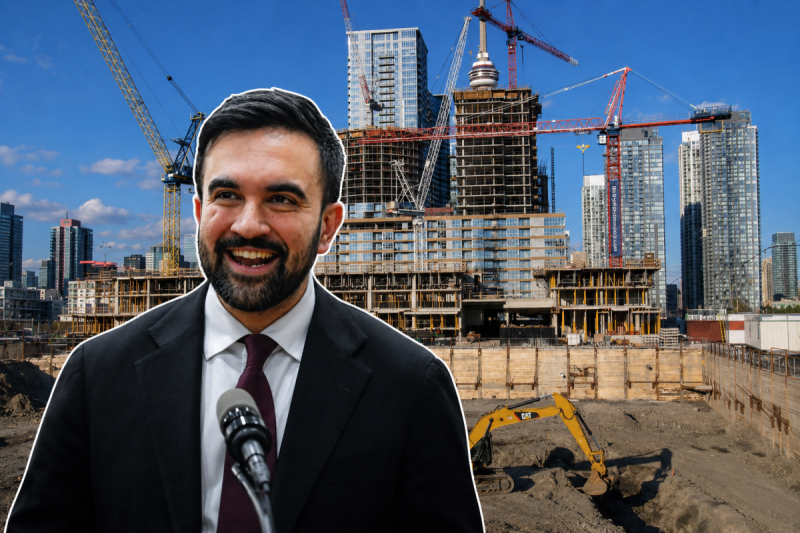
What Canadian cities can learn from Zohran Mamdani’s housing plan

On May 26, New York City’s democratic socialist Mayor Zohran Mamdani released his administration’s 100-page Block by Block housing plan. The headline numbers are impressive: $22 billion in capital investments, 200,000 new affordable homes, and 200,000 existing affordable homes preserved. The plan doesn’t mince words: affordability is aggressively and clearly defined as housing that “costs about one-third or less of residents’ incomes.”
The plan provides a detailed summary of the steps the city will take to achieve these goals, which revolve around an “all of the above” approach. Block by Block includes some of the usual suspects, including zoning reform and various private sector incentives. However, these policies, which are frequently centrepieces of Canadian housing initiatives, are treated as supplements to the city’s new, centralized approach.
The primary method through which affordable housing will be preserved and built is the publicly-owned New York City Housing Authority (NYCHA). The NYCHA, which is the largest public housing authority in North America, will take on its old mantle and build new public housing on public land. The city expects to add 8,000 new subsidized affordable housing units next year alone. What’s more, the city plans to build new low-cost housing cooperatives designed to create ownership opportunities for citizens. Municipal investment will allow for the repair and modernization of existing public housing stock without passing those costs on to the people who lives in city-owned buildings.
Yet, the primary focus of Mamdani’s plan isn’t developers or new units—it’s tenants. The first section of the policy framework, titled “Empowering Tenants and Strengthening Enforcement,” puts the 70 percent of the Big Apple’s residents who rent front and centre in the city’s vision of the future of housing. “Tenants at the mercy of these landlords have endured unsafe and unhealthy living conditions for years, and in some cases, generations,” the document reads. “That ends now.”
The plan commits to cracking down on abusive and negligent landlords, conducting “roof-to-cellar” inspections, and holding landlords accountable by using the full scope of the law. Mamdani has even pledged to create a pathway for properties owned by “bad actors” to be transitioned to responsible stewards. “When necessary, we will take aggressive legal action to remove negligent owners and property managers, and for buildings that have suffered chronic neglect, we will work to transfer ownership to responsible stewards… Stewards that include community land trusts, non-profits, or even the tenants themselves.”
The city will work hand-in-glove with tenants who the city sees as “the eyes and ears on the ground, alerting owners to problematic conditions early, and subsequently alerting the City if owners fail to take action.”
This isn’t surprising coming from a mayor who, on the first day of his administration, re-established the Mayor’s Office to Protect Tenants (MOPT), and later hosted “Rental Ripoff Hearings” where over 1,600 tenants were given a platform to share what wasn’t working with the housing system and how it could be fixed.
The city acknowledges that part of responding to the needs of renters is through government support for tenant unions. An entire page of Block by Block is dedicated to answering the question “What is a tenant union” and features the city’s commitment to support their development and work collaboratively with tenant groups to hold negligent landlords accountable. The city will also expand the ability of tenant unions to engage in legal rent strikes by updating the list of landlord violations deemed “rent-impairing violations” in NYC’s housing courts. Additionally, the city will improve access to legal representation for tenants facing eviction under a new “Right to Counsel” program.
Some have argued that Mamdani’s plan will have the opposite of its intended effects. The Washington Post editorial board suggests that, by empowering tenants to challenge landlords, the city will make housing less profitable and all but guarantee that fewer units will be built. Existing housing is just too expensive to maintain, critics say, and transferring ownership to so-called responsible stewards doesn’t make it any less costly to, for instance, install a new roof.
This position relies on the idea that landlords are barely scraping by—that no one could possibly maintain affordable housing while shouldering the costs of ownership. Unfortunately, the image of the struggling landlord is largely a fiction. The city’s Rent Guidelines Board found that landlords earned an average of $688 per unit per month on rent-stabilized apartments. That amounts to roughly $688 million in monthly profit from rent-stabilized homes alone. For financialized landlords in Canada, the margins may be even higher. Skyline Wealth Management, a real estate investment trust that owns more than 20,000 units across the country, reported a net operating income margin of 57.19 percent this year.
Block by Block explicitly recognizes real estate speculation as the primary driver of dysfunction in the housing system and understands tenant power and decommodification as the solution.
There is a great deal that Canadian cities can learn from New York’s approach. For years, housing debates in Canada have been trapped in a NIMBY-versus-YIMBY frame. The limit of our cities’ imagination on housing is whether they should protect single-family zoning and promote suburban expansion, or prioritize zoning deregulation and the gentrification of urban centres. Both positions cede housing development to the private sector which, time and time again, has demonstrated it will only build under conditions of rising home prices. After decades of this squabbling, with different sides winning the day in different regions, we have seen both positions result in the same outcomes: housing pain for working people.
After decades of trying to solve the dysfunction in our housing system with the same market mechanisms that created the dysfunction in the first place, Block by Block shows another path is possible. Politicians can recognize housing as a zero-sum game. They can articulate what is happening right in front of them: namely, that wealth accrued by housing investors comes at the expense of renters.
It’s time for Canada’s big cities to take note, and it’s time to challenging the notion that housing should function as a site of wealth extraction. We must build a non-market alternative capable of anchoring prices and empower tenants to fight back against their exploitation by financialized property owners.
Canada’s mayors and city councillors would be well served to study Mamdani’s plan—it represents the long-overdue future of housing policy on this continent.
Laurence Braun-Woodbury is a writer and community advocate who has worked with NGOs across the country to help adults experiencing poverty and homelessness. His first novel, Glamorous Failures, was published in 2023. His next book on housing financialization will be published by Between the Lines.