
Canada’s media meltdown is hiding in plain sight

Photo by Michael Kwan/Flickr
Almost drowned out by the intense media coverage last week of star witness Travis Dhanraj testifying before MPs on the first day of new Department of Canadian Heritage hearings into the State of the Journalism and Media Sectors was the previously unreported fact that the feds are indeed once again convening an inquiry in an attempt to figure out exactly what has gone so horribly wrong with our news media. One possible answer, which the politicians are unlikely to put their fingers on, is that many of the problems are the result of their own blundering. The issues constitute nothing less than a crisis, according to a report the ministry’s standing committee issued in late 2024 that called for a national forum on the media. They include the dominance of foreign digital companies, the loss of hundreds of newsroom positions across Canada, the resulting “news deserts” with no journalists reporting on them, and of course the perennial hot-button issue of the CBC. Then there is the threat of disinformation as identified by Madame Justice Marie-Josée Hogue in her report issued last year on foreign interference in our politics, which will only be aided by the widespread introduction of artificial intelligence.
One direction in which the Heritage committee is unlikely to look, as the topic seems to be off-limits for politicians aspiring to re-election, is the stratospheric level of corporate concentration of news media ownership here, which is among the world’s highest, and the overwhelming foreign ownership of our largest newspaper chain. Postmedia Network, which owns most of the major dailies in Canada, including eight of the nine largest west of Winnipeg, is 98 percent owned by US hedge funds, and the founder of the largest by far is an ardent Trump supporter. The hedge funds have milked our newspapers of more than $500 million in debt payments over the past 15 years. To make those payments, hundreds of journalists have been laid off. To increase its revenues and thus spin out its press diminishment strategy for a few more years and keep the debt payments flowing, Postmedia bought up rival chains Sun Media in 2014, Brunswick News in 2022, and Saltwire Network in 2024, with the latter two giving Postmedia a stranglehold in Atlantic Canada.
In a bid to treat the symptoms rather than the underlying cause of the problem, the ruling Liberals first gave in to a massive industry lobbying campaign by newspapers in 2019 and gifted them with a five-year, $595 million bailout. When that did little to stop the bleeding, Heritage committee MPs drew up the Online News Act in 2023 in an attempt to force digital giants Google and Meta to subsidize our news media, as Australia had done two years earlier. That backfired when Meta blocked news on its Facebook and Instagram social networks rather than pay up, which has badly hobbled independent online media here. Google agreed to contribute $100 million a year to publishers and the feds renewed their bailout for another five years. Their bleeding continues. The problems are similar in our book publishing industry, where foreign ownership dominates and as a result Canadians are now sold books mostly by American authors, as Richard Stursberg chronicles in his new book Lament for a Literature. He blames this on the “often incomprehensibly bad decisions” made at the federal level, particularly at Heritage, which he quips has proved “a patsy every time a foreigner wanted to buy a Canadian publishing asset.”
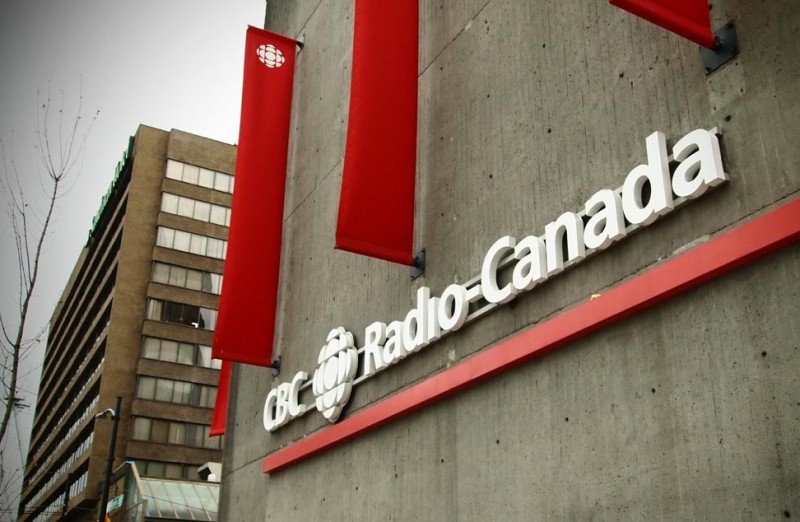
For his part, Dhanraj did not disappoint with his long-awaited testimony excoriating our public broadcaster, which he left in a huff last year over issues of editorial independence. He then filed a complaint with the Canadian Human Rights Commission, which has not yet been heard, alleging discrimination, harassment, bullying and tokenism. The start of Heritage hearings into news media last week offered an earlier opportunity for a public airing of his grievances following a flurry of publicity last summer, and he filed a 26-page brief for the occasion. His biggest beef seems to be that he didn’t have complete control over which guests he could book on his show Canada Tonight, as preference went to the CBC’s flagship program Power & Politics, which immediately preceded it. Conservatives were boycotting Power & Politics, and if it couldn’t have them on, neither could Canada Tonight.
Things started going off the rails for Dhanraj, a journalist of 25 years experience whom the CBC recruited away from Global Television in 2021 supposedly to increase its diversity, when he could not get then-CBC President Catherine Tait on as a guest during the 2024 controversy over executive bonuses at the public broadcaster. Dhanraj posted on X to complain about that, after which he was taken off the air and threatened with reassignment, causing him to twice take medical leave for stress before finally being let go. He now records a podcast highly critical of the CBC called Can’t Be Censored, for which his first guest was pointedly Conservative leader Pierre Poilievre.
Dhanraj brought binders full of evidence to the Heritage committee which included internal communications and testimony from former colleagues to show that the CBC is a toxic workplace by dint of rampant bullying, harassment, and racial discrimination. Diversity efforts at the CBC, he claimed, are just for show. Conservatives have seized on the problems Dhanraj says he had in booking guests from their party as evidence of liberal bias of the capital-L variety, elevating him into a martyr. Such allegations are not new, as other disaffected former CBC employees have noted the same thing. Its liberalism is also readily apparent to any CBC viewer who consumes other sources. Public broadcasters are well-known for being liberal, if not Liberal. Conservatives in the UK complain about liberal bias at the BBC just as conservatives in Australia complain about it at the ABC. Public broadcasters in Europe have long suffered attacks from populist right-wing politicians who accuse them of being elitist, pro-immigration, a waste of tax dollars and biased toward sitting governments. A range of perspectives is what is needed most, and in Canada the CBC’s liberalism nicely balances the right-wing Postmedia press.
The simple fact is that most journalists are more liberal than the general population, but media owners and the editors they hire are often more conservative. Conservative publications actually have trouble finding journalists who are conservative enough for their liking and often choose to instead train their own. Research has long shown that journalists tend to fall into demographic categories that indicate liberalism, including age (younger), income (higher), education (higher) and place of residence (urban). My first rule of media bias, from having studied and taught the subject for 25 years, is that every media outlet has a political bias to a greater or lesser extent and that straight neutrality, or so-called “objectivity,” is impossible. Some media outlets, such as the Toronto Star, have been honest enough to put their principles down in writing. Most others have not, but they all nonetheless have a political bias which is enforced through a set of unwritten rules. Sociologist Warren Breed, a former reporter for the Oakland Tribune, found in his classic 1955 study “Social Control in the Newsroom” that such rules were enforced through a process of socialization. Journalists learn to go along to get along or else they end up leaving. Some publications, such as the Postmedia papers, have covertly enforced an increasingly right-wing editorial slant on their editors as a marketing strategy to appeal to more conservative readers.
As for toxic workplaces, I would guess that most newsrooms would qualify as such, especially those doing the daily news grind. I suffered enough editorial indignities in my first career as a journalist that they finally led to my departure from the news business. Management of the Vancouver Province newsroom had been fairly benign until one of the earliest diversity edicts came down from head office in the late 1980s, decreeing that those of a certain gender should be given priority for promotion to management, and soon the knives came out to settle old scores. My new city editor, who had previously covered my beat at the courthouse, killed a profile I had been assigned to write of a lawyer who had been making news simply because she didn’t like him. The capper came after a story I broke caused intense controversy, with columnists from even my own newspaper attacking it. When I was not allowed a rebuttal, I took it to a local newsmagazine instead and was slapped with a six-page letter of reprimand on the grounds that I had written for a competing publication. My departure was thus inevitable when buyouts were next offered. The irony came when my story won a Vancouver Press Club award (well, at least an honourable mention).
The lesson is that most mainstream journalists, except those who work for themselves, are never truly independent but instead labour at the behest of first managers and ultimately executives and owners. The CBC is owned by all of us, so its managers and executives must take into account our collective best interests.
Marc Edge is an Associate Professor of Communication at University Canada West, a long-time journalist, and the author of eight books, most recently Tomorrow’s New: How to Fix Canada’s Media.